Childhood home
An earlier role or emotional rule may be more relevant than a wish to return.
Catalog entry · Memory & belonging
Childhood houses, locked doors, extra rooms, and changing layouts turn remembered space into a question about access and identity.
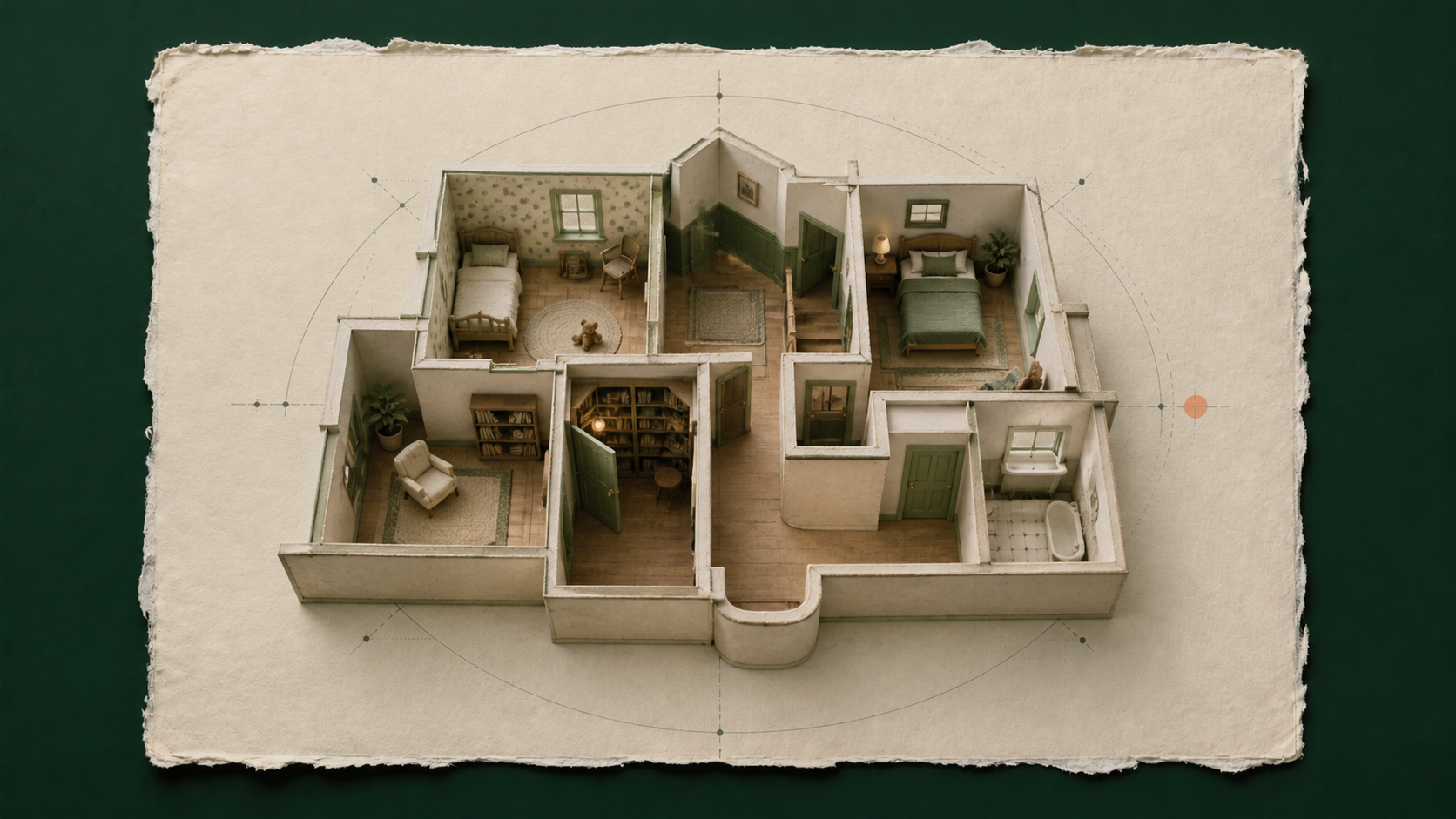
Created for this evidence entry. The image illustrates the subject; it is not evidence for an interpretation.
No dream image diagnoses a condition or predicts an event. The dreamer is the final authority on whether an interpretation fits.
Better first question
Meaning matrix
An earlier role or emotional rule may be more relevant than a wish to return.
Discovery, postponed sorting, or newly available memory becomes the stronger comparison.
Permission and protection matter: identify which side you were on and who held access.
A moving map can resemble expectations, roles, or identity that no longer stay fixed.
Compare lenses
Direct studies
Dream settings can draw on recent, remote, important, and mundane memories without replaying one location exactly.
Reflective method
Who belonged, who entered, and what responsibility attached to each room can expose the scene’s practical conflict.
Historical tradition
Homes can stand for family, ancestry, privacy, fortune, or the self, but those associations change across households and cultures.
Try this without forcing an answer
Sources & limits
Sources support the labeled frameworks above; they do not prove a universal interpretation for an individual dream.