Research-informed
Memory lens
Dream settings often combine features from several remembered places rather than reproduce one location accurately.
Context record · Home or rooms
Dream homes can recombine memory, belonging, privacy, identity, and practical concerns about safety or change.
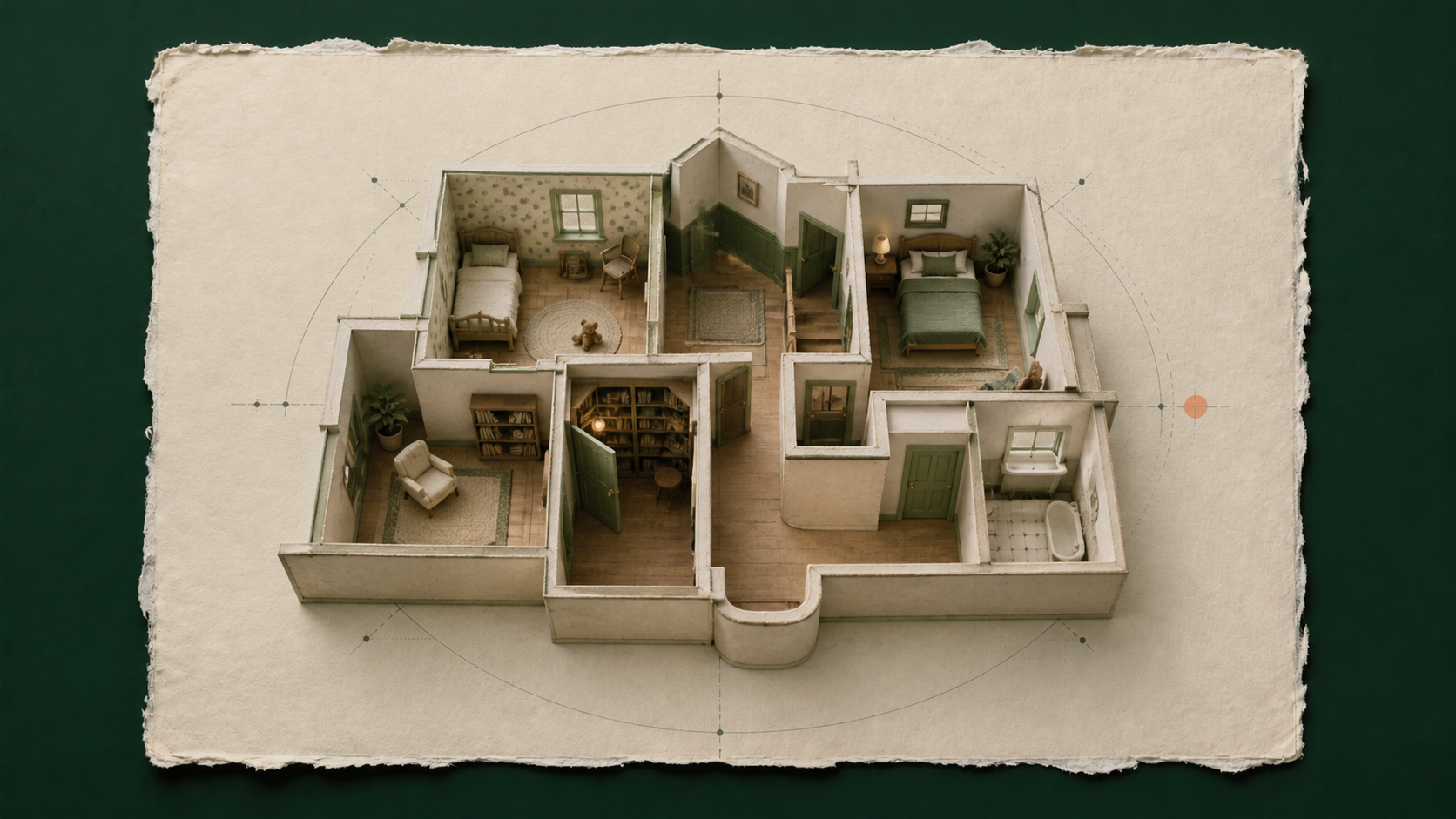
Created for this motif’s context records. The image illustrates the subject; it is not evidence for an interpretation.
Identify whether you wanted entry, feared what was behind it, or needed the door to stay closed.
It does not diagnose a condition, reveal another person’s intentions, or predict a future event. A memorable match after waking can be meaningful to you without establishing a predictive mechanism.
Details that change the reading
Who had the key
Which side you were on
Whether the lock felt protective or punitive
Compare explanations
Research-informed
Dream settings often combine features from several remembered places rather than reproduce one location accurately.
Reflective method
Who belongs, who has access, and what responsibilities attach to the space may reveal the stronger concern.
Historical tradition
Homes are often used as images of family, self, ancestry, and fortune, but those associations vary across cultures and households.
Follow-up questions
Sources & claim limits
These sources support the research labels used on this page. They do not demonstrate that this scene has a universal interpretation or predicts an event.
Small dream samples showed changing indoor and outdoor settings; the authors described dream construction as selecting episodic memory elements through broader semantic categories.
↗Dream reports incorporated recent, remote, important, and mundane waking memories in differing proportions rather than replaying one source exactly.
↗Want to include your emotion and action?